A Closer Look at Dahlias: Discovering the Dahlia Fire at Britzer Garten, Berlin
There are flowers that catch your eye immediately.
And then there are flowers that make you stop, look again, and wonder how so many different forms can possibly belong to the same flower.
For me, Dahlias are definitely the latter.
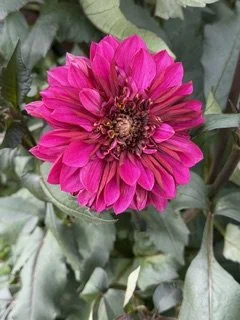
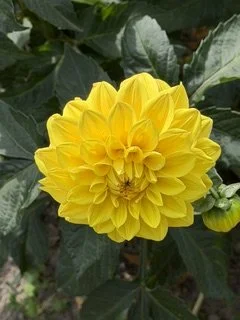
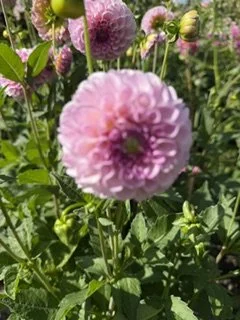
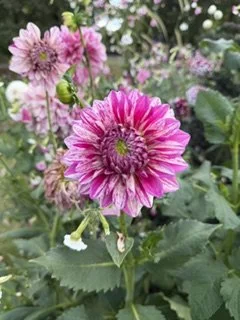
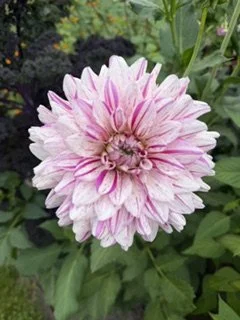
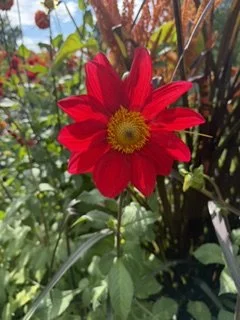
This late summer, I visited Dahlienfeuer – the Dahlia Fire – at Britzer Garten in Berlin, and what I expected to be a beautiful flower display turned into something much more interesting: a lesson in shape, structure and the incredible diversity of dahlias.
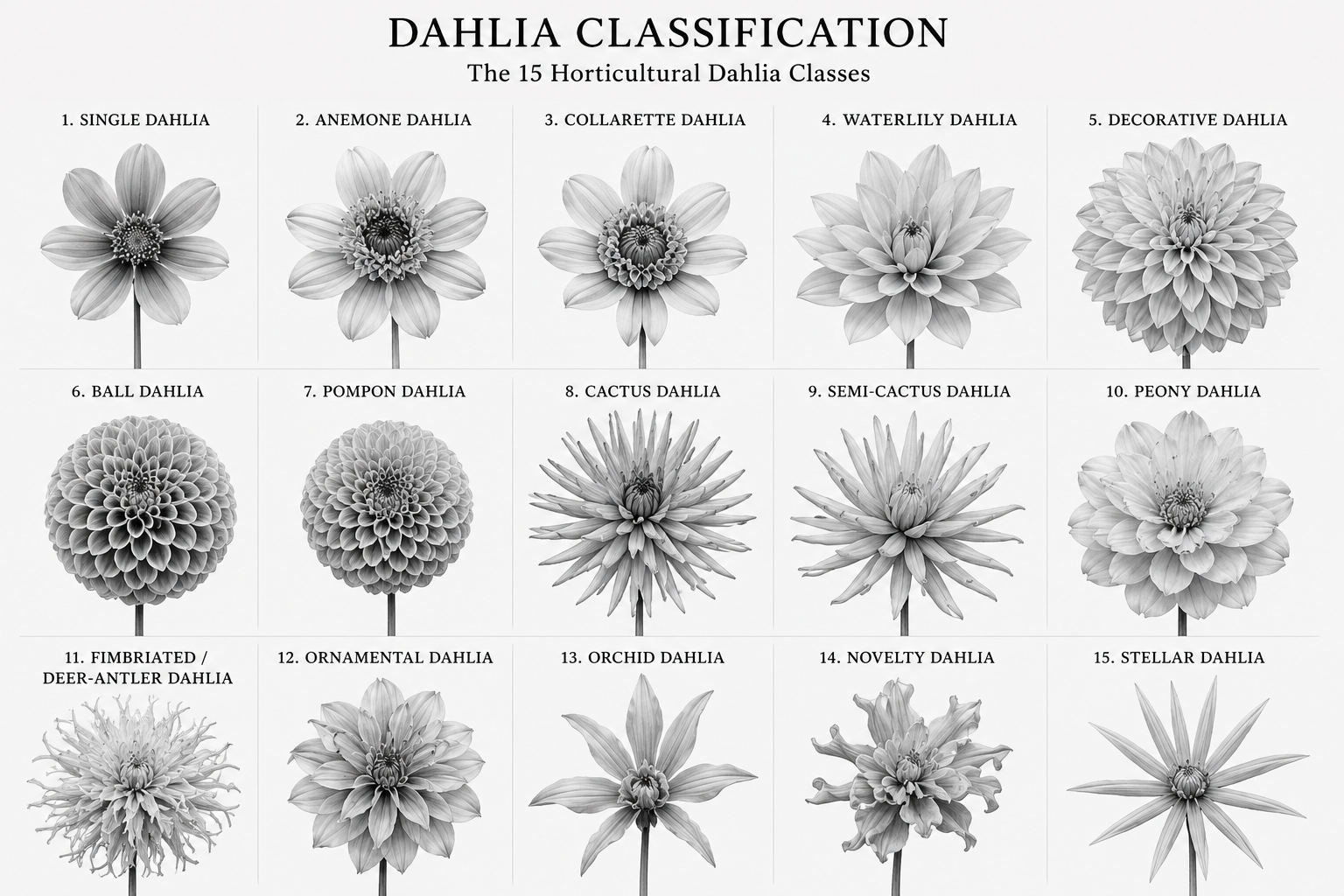
15 classes of dahlias
One of the things I found particularly fascinating is that dahlias are classified according to their flower form, rather than their colour.
There are 15 official dahlia classes in Europe and 21 in the US, ranging from simple, open flowers to highly structured decorative dahlias, perfectly spherical ball and pompon dahlias, dramatic cactus forms and the wonderfully unusual deer-antler dahlias.
And this year, Britzer Garten is showcasing all 15 classes.
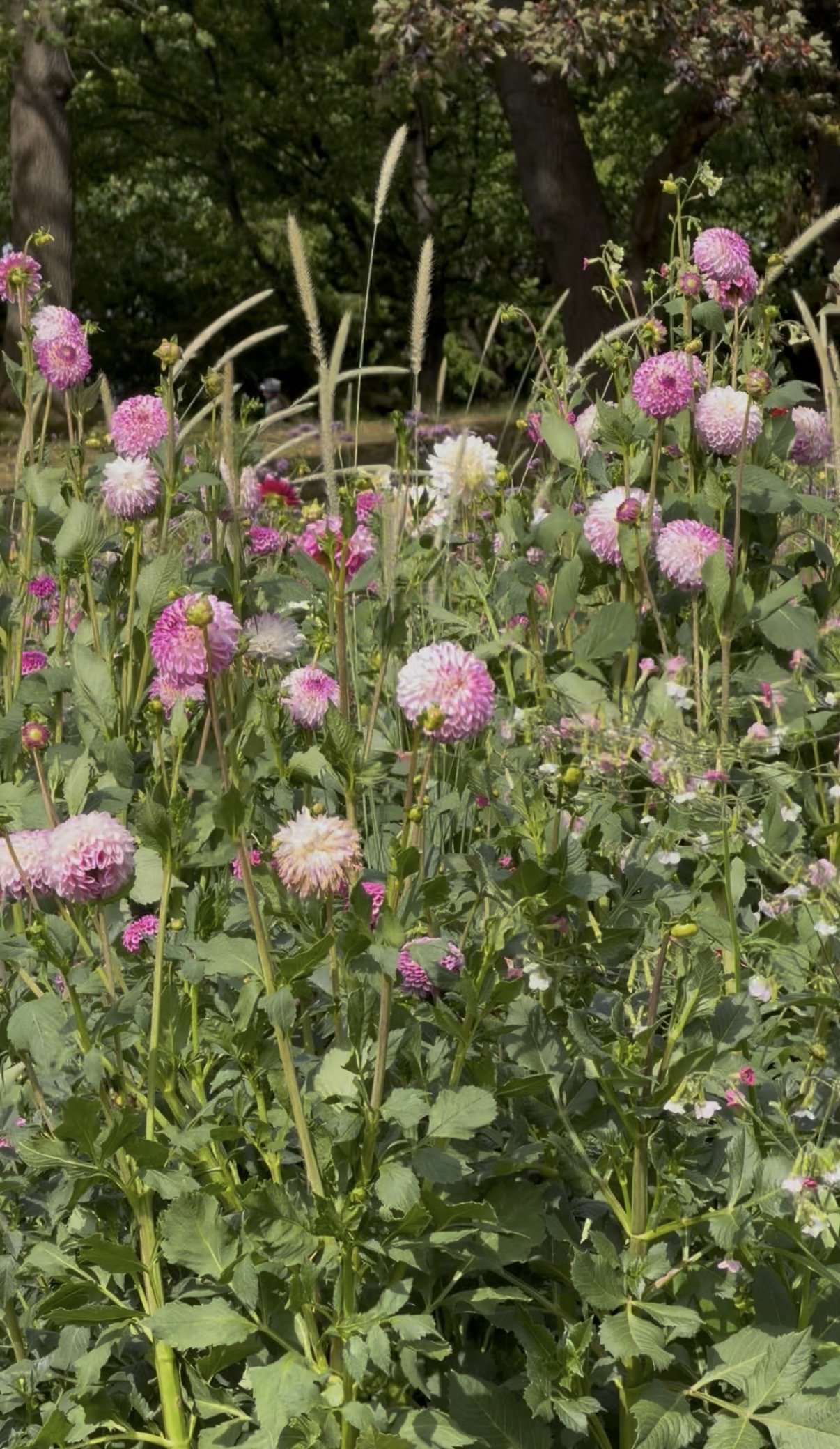
Around 3,800 dahlias from approximately 200 varieties are planted across the 2,000-square-metre special exhibition area. The flowers are arranged by colour and combined with summer flowers, grasses and ornamental foliage, creating a planting that feels much more like a living composition than a conventional collection.
For a florist, this is particularly inspiring.
Because once you stop looking only at colour, you begin to notice something else.
Shape.
Learning to really look at a flower
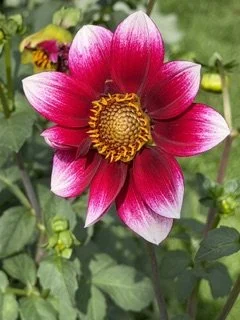
Take a simple dahlia.
Its petals form an open ring around a clearly visible centre. It feels light, natural and almost effortless.
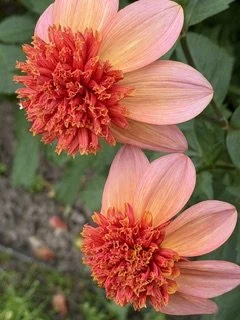
Then you come across an anemone dahlia.
Suddenly the centre becomes much more prominent and textured, creating a completely different visual impression.
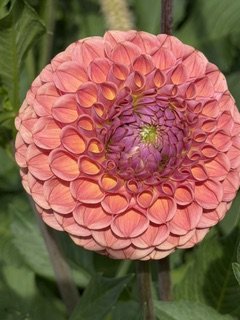
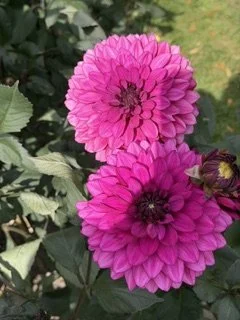
A ball dahlia is something else entirely. Its petals are arranged so precisely that the flower almost looks constructed rather than grown.
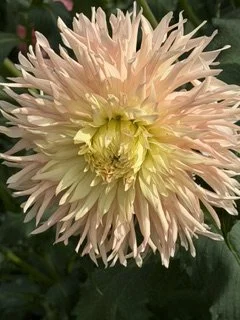
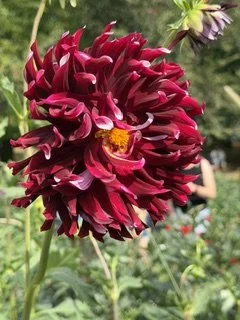
And then there are the cactus and semi-cactus dahlias.
Their narrow, pointed petals create movement in every direction. Some appear almost explosive, while others have an incredibly elegant architectural quality.
The colour may be similar, but the language of the flower is completely different.
That is what I found myself looking at more and more during my visit.
For florists, form matters
As a florist, I naturally tend to think about flowers in terms of how they might behave in an arrangement.
A round ball dahlia can create a strong focal point.
A cactus dahlia introduces direction and movement.
A simple dahlia brings openness and air.
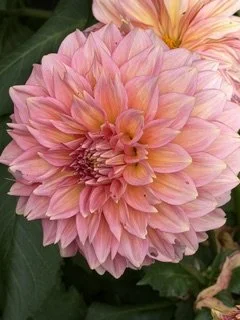
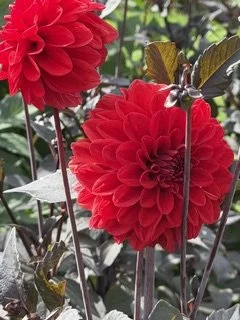
A large decorative dahlia creates volume and abundance.
And the more unusual forms can add something unexpected — a little tension, asymmetry or movement.
This is why I think it is so valuable to see flowers growing rather than only seeing them in a vase.
In a floral arrangement, we often experience a flower as one small element within a larger composition.
In the garden, you can see its entire character.
You can see how the petals open.
How the flower sits on the stem.
How large it becomes.
How it moves in the wind.
How the shape changes as it develops.
And all of that becomes part of the visual vocabulary we eventually bring into our own floral work.
From 'Totally Tangerine' to 'Jescot Julie'
One of my favourite parts of the exhibition was being able to connect the classification with actual varieties.
The plants are clearly labelled, so you can begin to associate the sometimes rather technical classifications with real flowers.
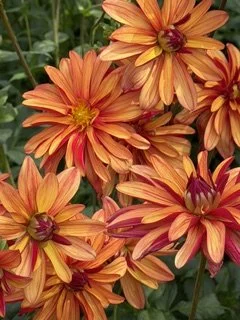
I photographed varieties such as 'Totally Tangerine', 'Truly Scrumptious', 'Jescot Julie', 'Stolz von Berlin' and 'Président Saint-Gilles', alongside many others.
Suddenly the classification doesn't feel abstract anymore.
You can actually look at a flower and ask:
What makes this one a ball dahlia?
Why is this one classified as semi-cactus?
What makes this flower an orchid dahlia rather than a decorative one?
And that, for me, is where the exhibition becomes particularly interesting.
It teaches you how to see.
The beauty of an imperfect flower
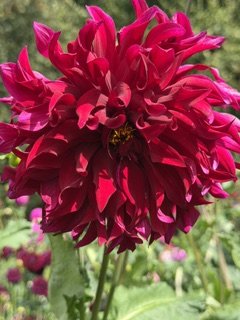
One of the forms I found especially intriguing was the deer-antler dahlia.
Its petals are narrow, irregular and dramatically divided, creating an almost wild silhouette.
It doesn't have the perfect symmetry of a ball dahlia.
It doesn't try to look perfectly controlled.
And yet it is incredibly beautiful.
It reminded me of something I often find in floral design:
Beauty doesn't always come from perfection.
Sometimes the most interesting flowers are the ones that break the expected pattern.
A garden as a source of creative education
The Dahlia Fire isn't simply a display of beautiful flowers.
An accompanying information exhibition also explains the history, cultivation, and classification of dahlias. The flower's history is fascinating: dahlias originated in Central America and were cultivated by the Aztecs before being introduced to Europe at the end of the eighteenth century.
Today, thousands of registered varieties exist, and their remarkable differences in flower shape have led to the 15-class classification system. The classification is horticultural rather than botanical, with flower form and size being important criteria rather than colour.
I love exhibitions like this because they sit somewhere between beauty and education.
You can simply walk through and enjoy the colours.
But if you slow down, you start learning.
And if you are a florist, designer or simply someone who loves flowers, that kind of observation is invaluable.
My takeaway
I went to the Britzer Garten to look at dahlias.
I left thinking about form.
About how a flower can feel architectural, wild, delicate, geometric, romantic or playful simply because of the way its petals are arranged.
And perhaps that is one of the most useful things we can learn from nature:
Before we can create beautiful compositions, we need to learn to observe.
Not just colour.
Not just beauty.
But line, texture, proportion, movement and structure.
The next time you see a dahlia, take a closer look.
Don't just ask yourself “What colour is it?”
Ask:
“What is its shape telling me?”
Love Julia
Dahlia Fire at Britzer Garten
The Dahlienfeuer 2026 is currently being shown at Britzer Garten in Berlin. The exhibition presents all 15 official dahlia classes and runs during the late-summer flowering season.
Britzer Garten Dahlien Feuer