Marie Antoinette, Beauty & the Punishment of Women Who Refuse to Disappear
My obsession with Marie Antoinette began long before I truly understood her.
I first came across her as a teenager while preparing a school presentation about the fashion of Versailles. I remember being completely mesmerized by the extravagant silhouettes, the powdered hair, the silk shoes, the embroidery, the flowers, the ribbons — an entire world where beauty was not an afterthought, but a language. Everything was decorative, symbolic, handcrafted. Every detail mattered.
Years later, in my twenties, I watched Sofia Coppola’s Marie Antoinette starring Kirsten Dunst, and suddenly I no longer only saw the queen — I saw the girl.
A fifteen-year-old Austrian archduchess sent away from her home to become the Dauphine of France. A child, essentially, stripped of everything familiar before even crossing the French border. History often forgets this detail: Marie Antoinette was not allowed to bring anything from Austria with her — not her clothes, not her belongings, not even her dog. She was symbolically “reborn” as French upon arrival. Imagine the loneliness of that.
When I later traveled to Versailles and stood inside her private chambers, visited the Petit Trianon and her fictional countryside retreat, Le Hameau de la Reine, my fascination deepened even further.
Because suddenly the image created by history did not align with the woman I sensed there.
I saw someone yearning for softness, intimacy, and normality inside one of the most performative courts Europe had ever known. Versailles was theater. Every movement was watched. Every meal observed. Every outfit political. Marie Antoinette escaped into gardens, flowers, nature, music, and beauty because they offered her something profoundly human.
And yes — she loved fashion, decoration, celebrations, and excess. But why are women’s passions for beauty so often used to dismiss their intelligence or humanity?
What many people do not know is that Marie Antoinette was also deeply involved in charity work. She funded hospitals, supported orphanages, donated to poor families during harsh winters, and often gave personal financial aid to people in need. Historian Antonia Fraser writes extensively about this in her biography Marie Antoinette: The Journey. Yet history rarely remembers women for their compassion as much as it remembers them for their appearance.
She became a symbol onto which an entire nation projected anger, fear, misogyny, and political unrest.
And perhaps this is also why I feel so emotionally connected to her story.
Because for centuries, women who stood out were punished for it.
Women who were visible. Women who loved beauty. Women who occupied space. Women who expressed themselves too loudly, too artistically, too extravagantly, too differently.
Marie Antoinette became an easy target because she represented femininity in a highly visible way. Her clothes, her hairstyles, her spending, her confidence — all became public obsession. Male rulers before her had indulged in luxury endlessly, yet history reserved a particular cruelty for her.
Even the infamous phrase “Let them eat cake” was never actually said by Marie Antoinette. Historians widely agree this quote existed years before she arrived in France, yet it remains attached to her name because it fit the narrative people wanted to believe.
That is what fascinates me most about her:
the distance between the real woman and the myth created around her.
And perhaps that is why I am endlessly inspired by the Rococo and Baroque eras. Not simply because they were visually beautiful, but because they celebrated craftsmanship, artistry, decoration, symbolism, sensuality, and emotion. Every room, every fabric, every floral arrangement, every painting was created with intention and incredible skill.
In today’s world, where everything becomes faster, flatter, and more disposable, I find enormous comfort in beauty created slowly and thoughtfully.
Beauty matters.
Not superficial beauty — but beauty as emotion, atmosphere, poetry, craftsmanship, and care.
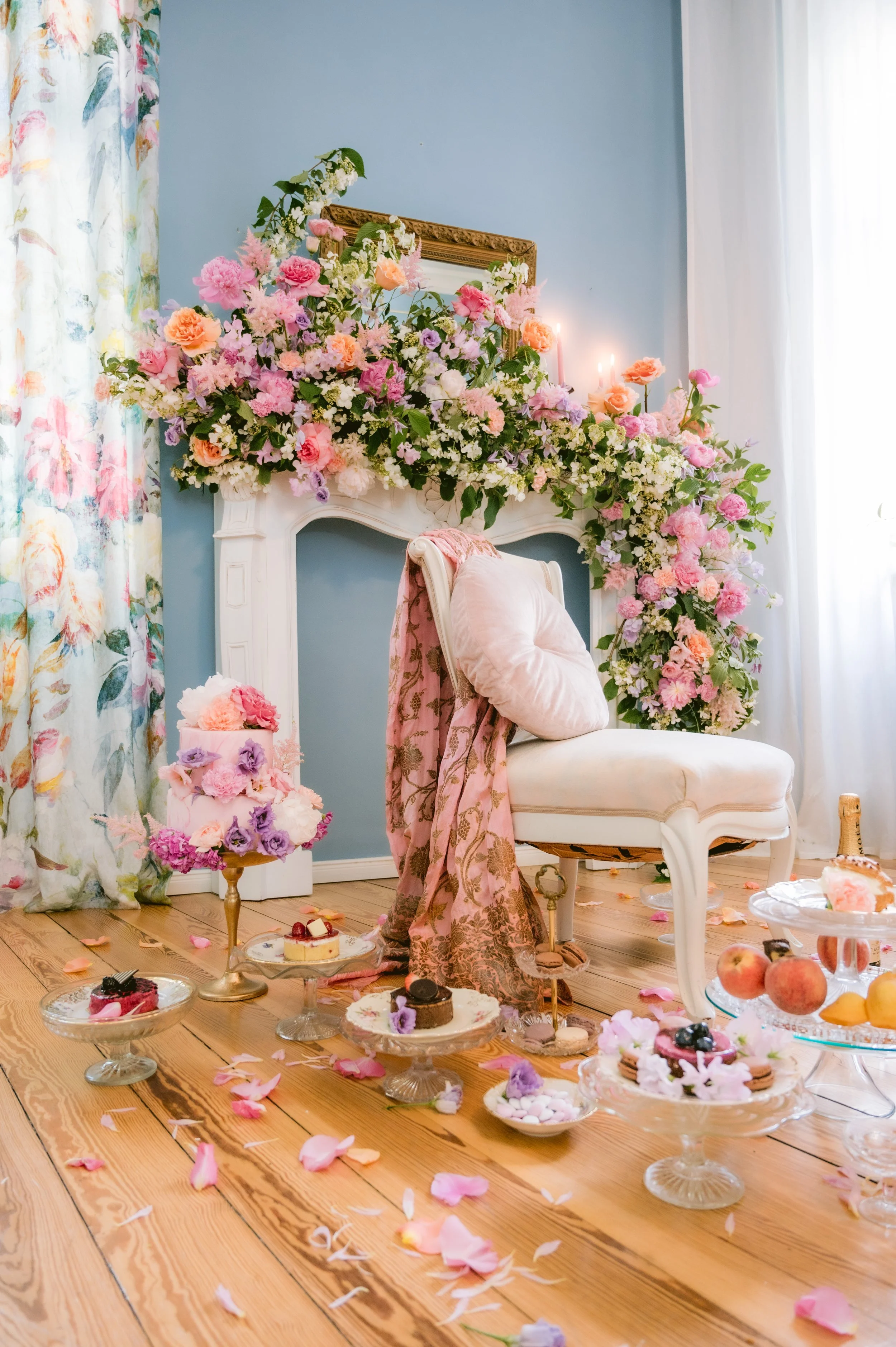
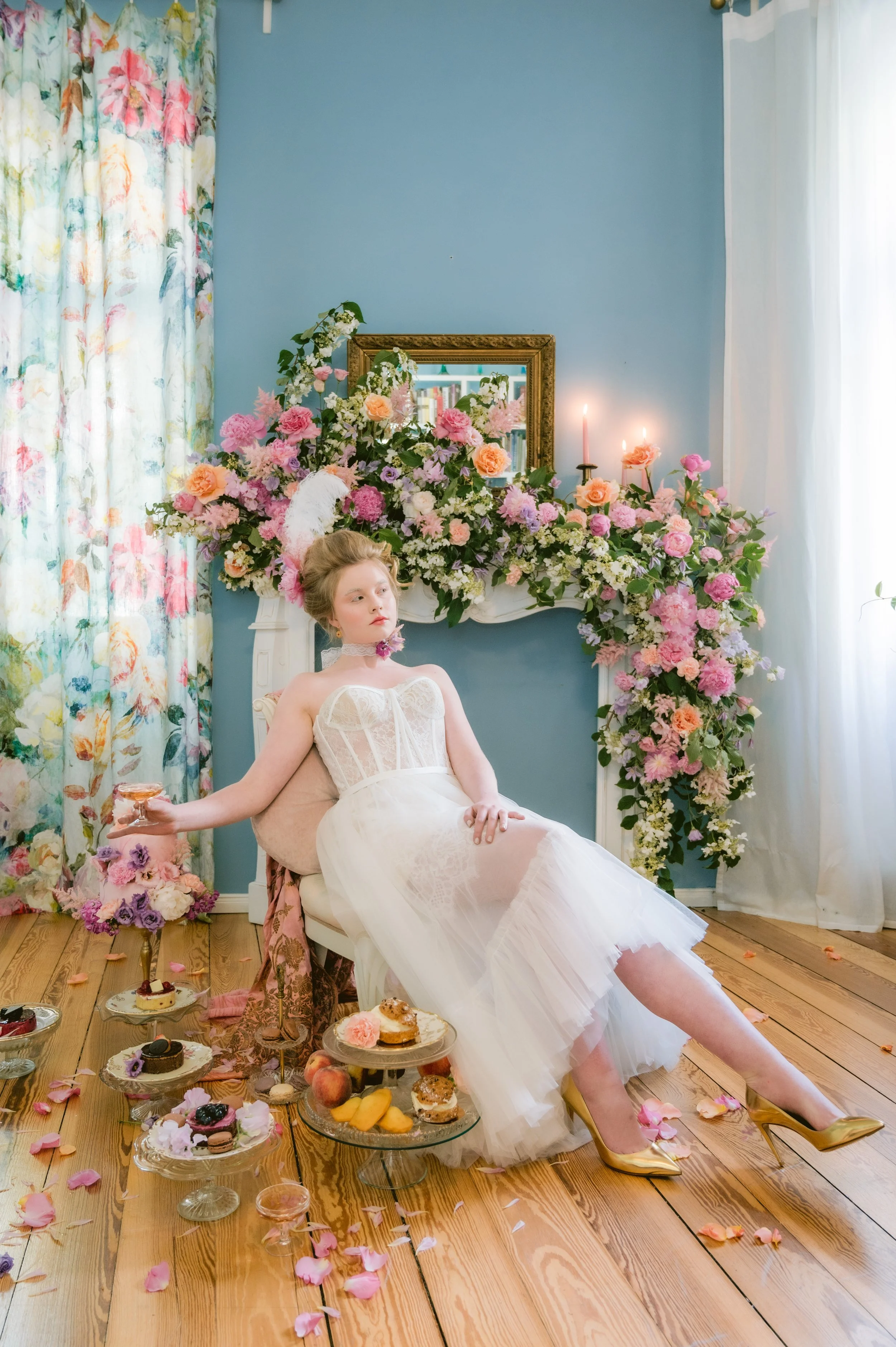
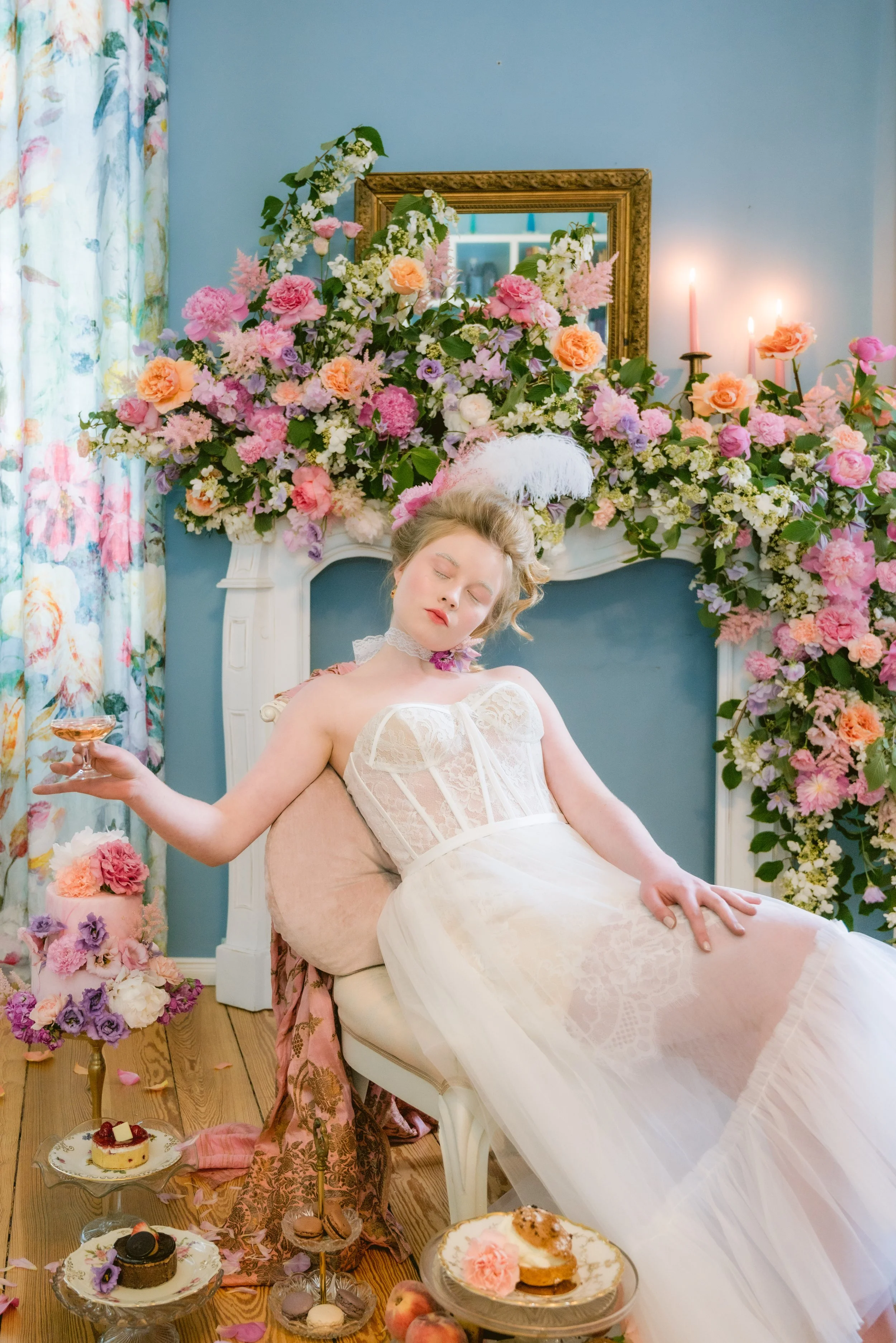
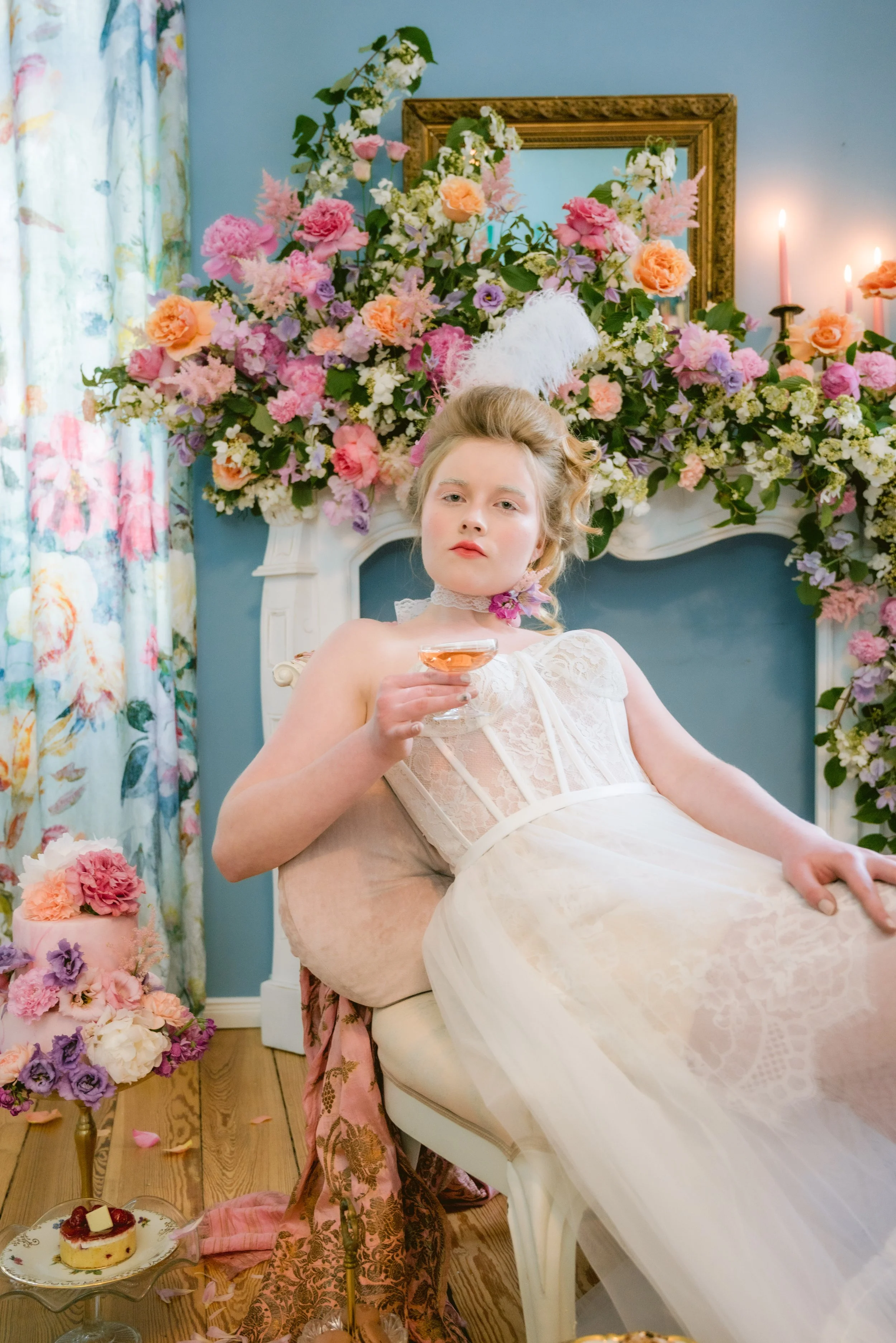
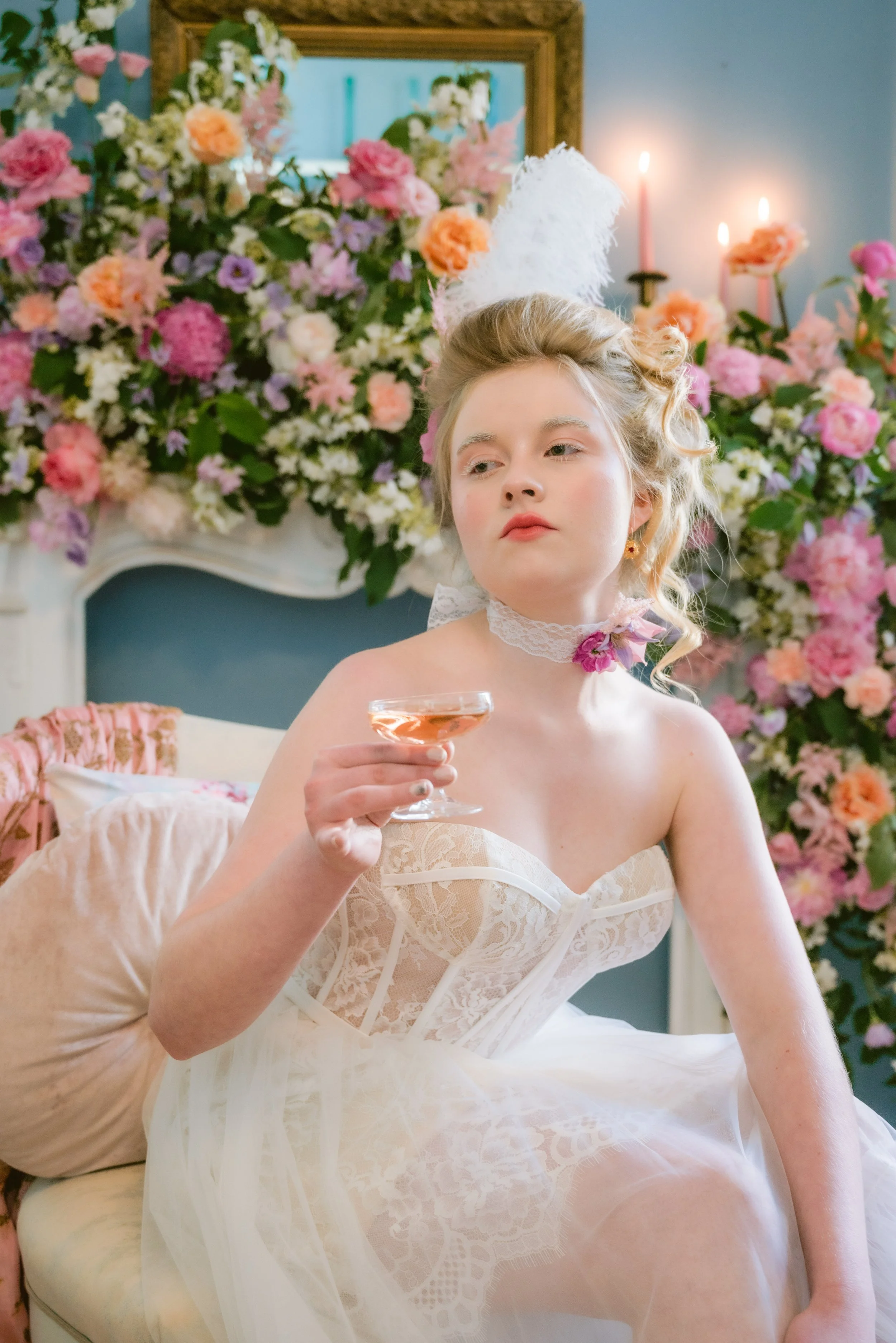
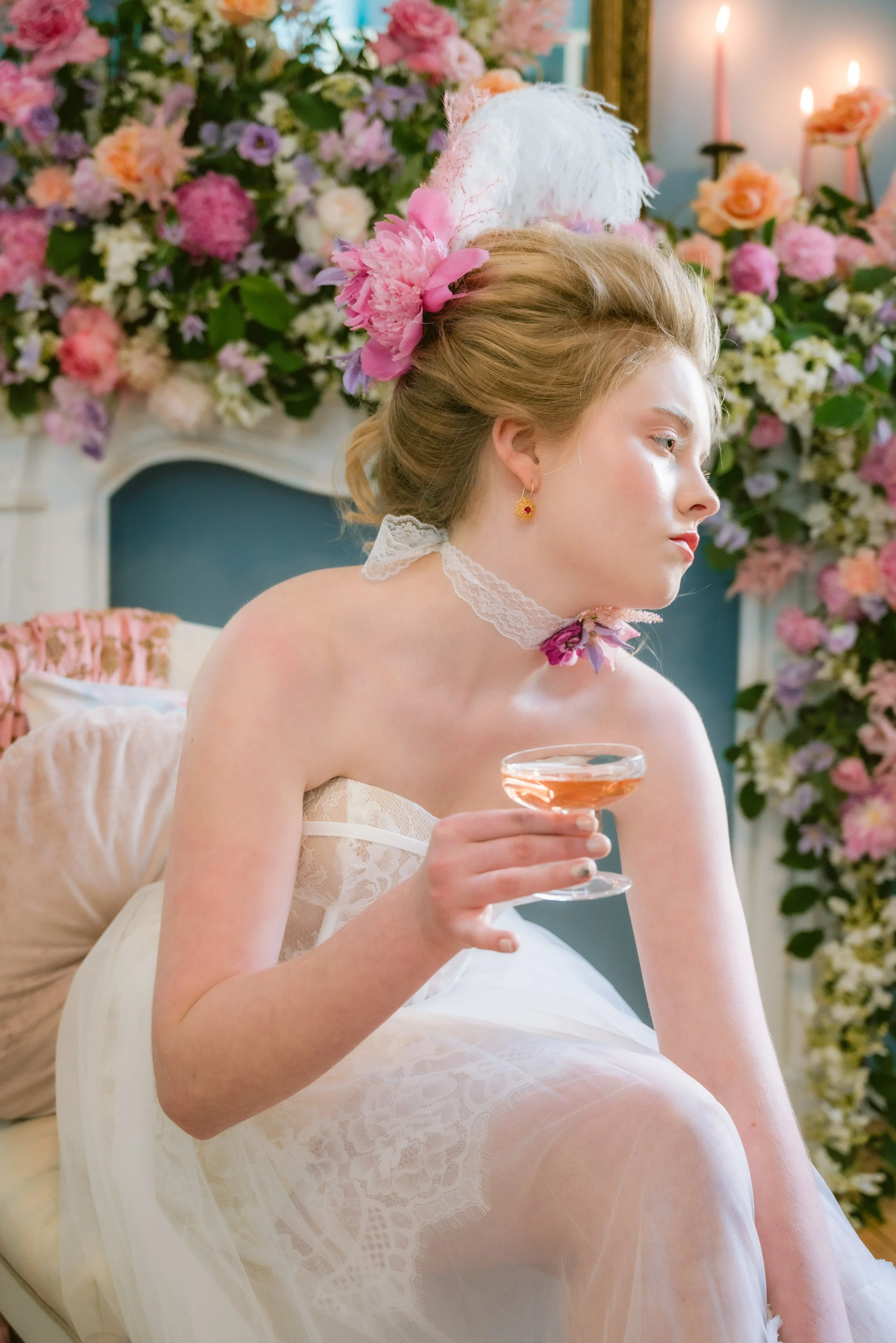
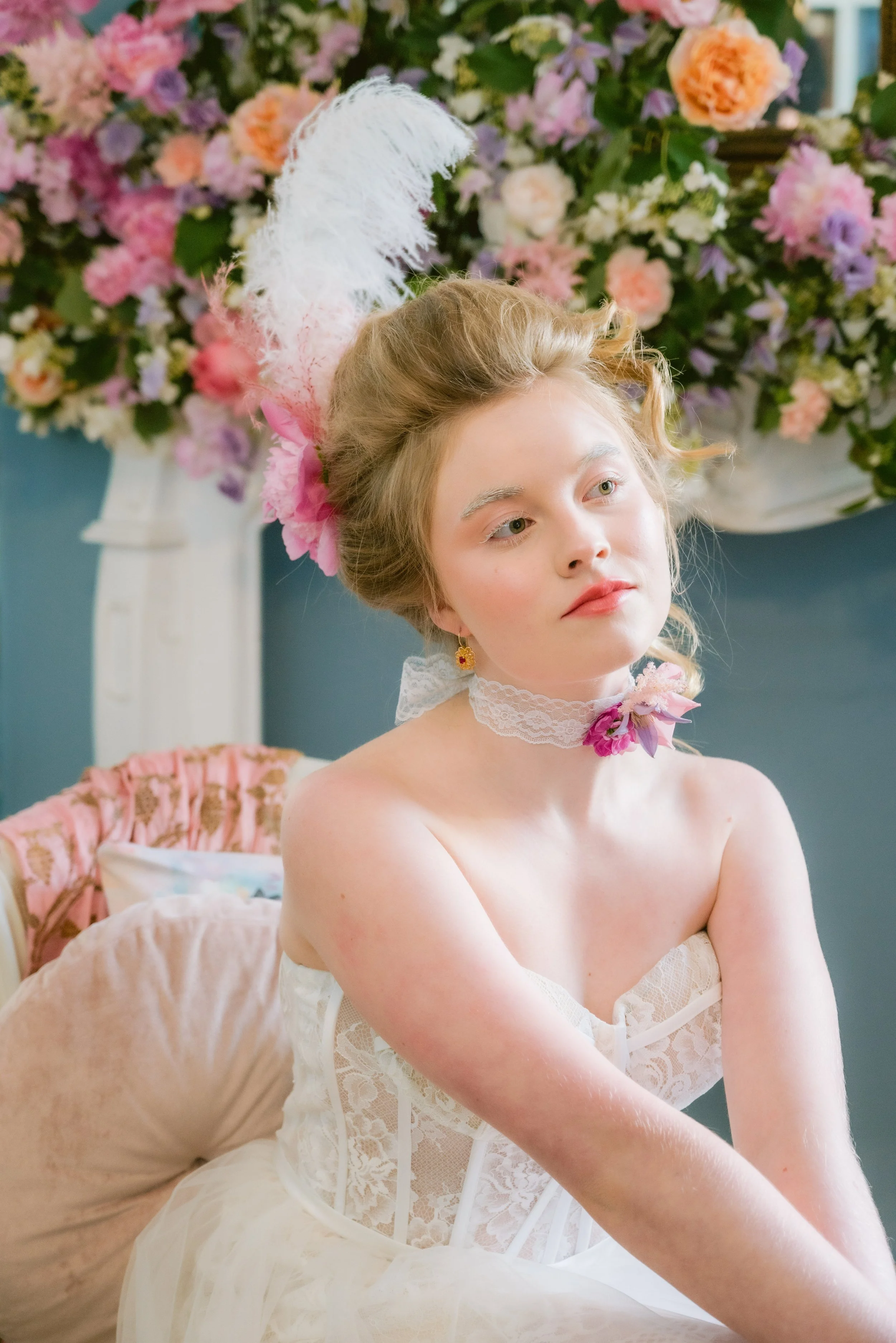
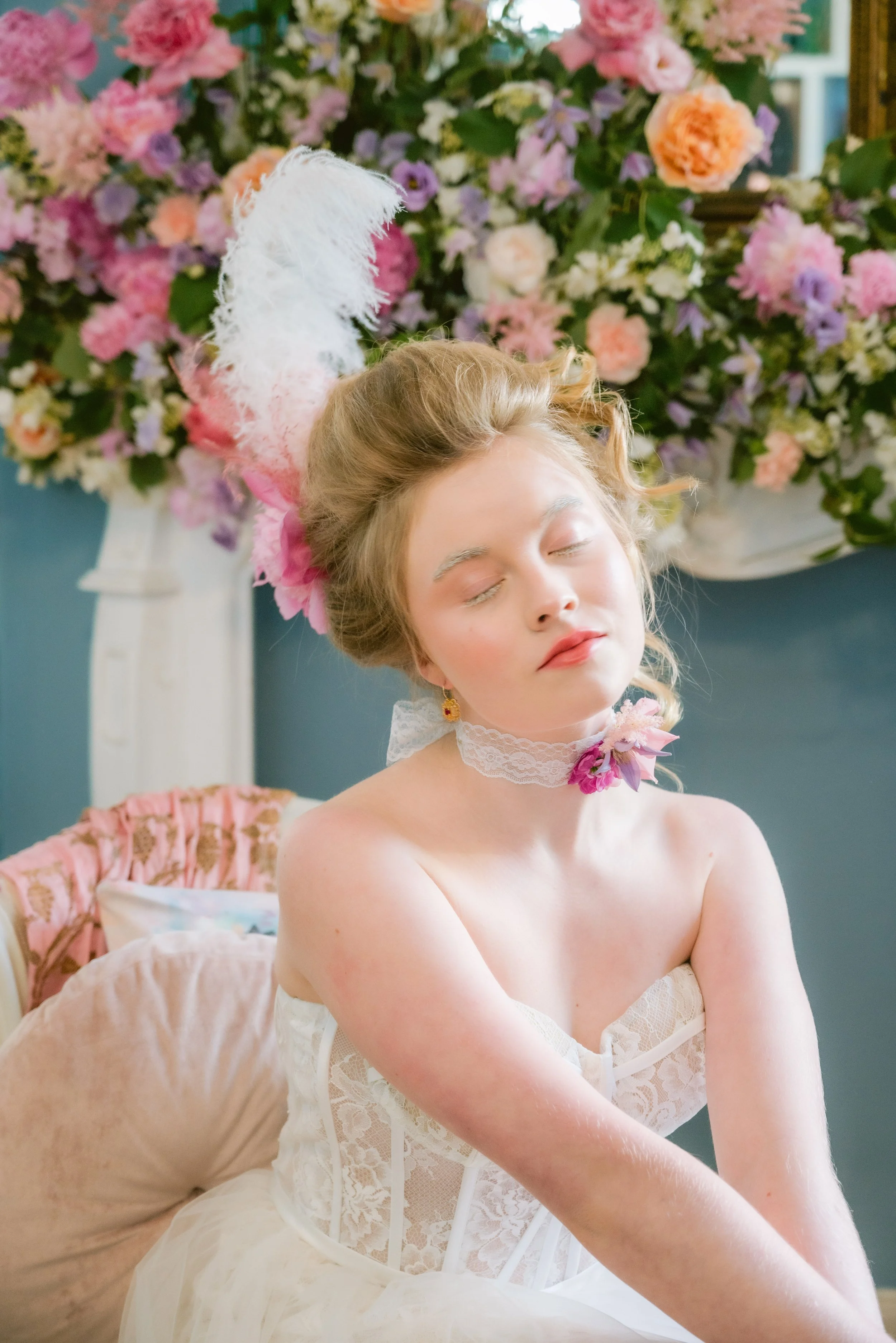
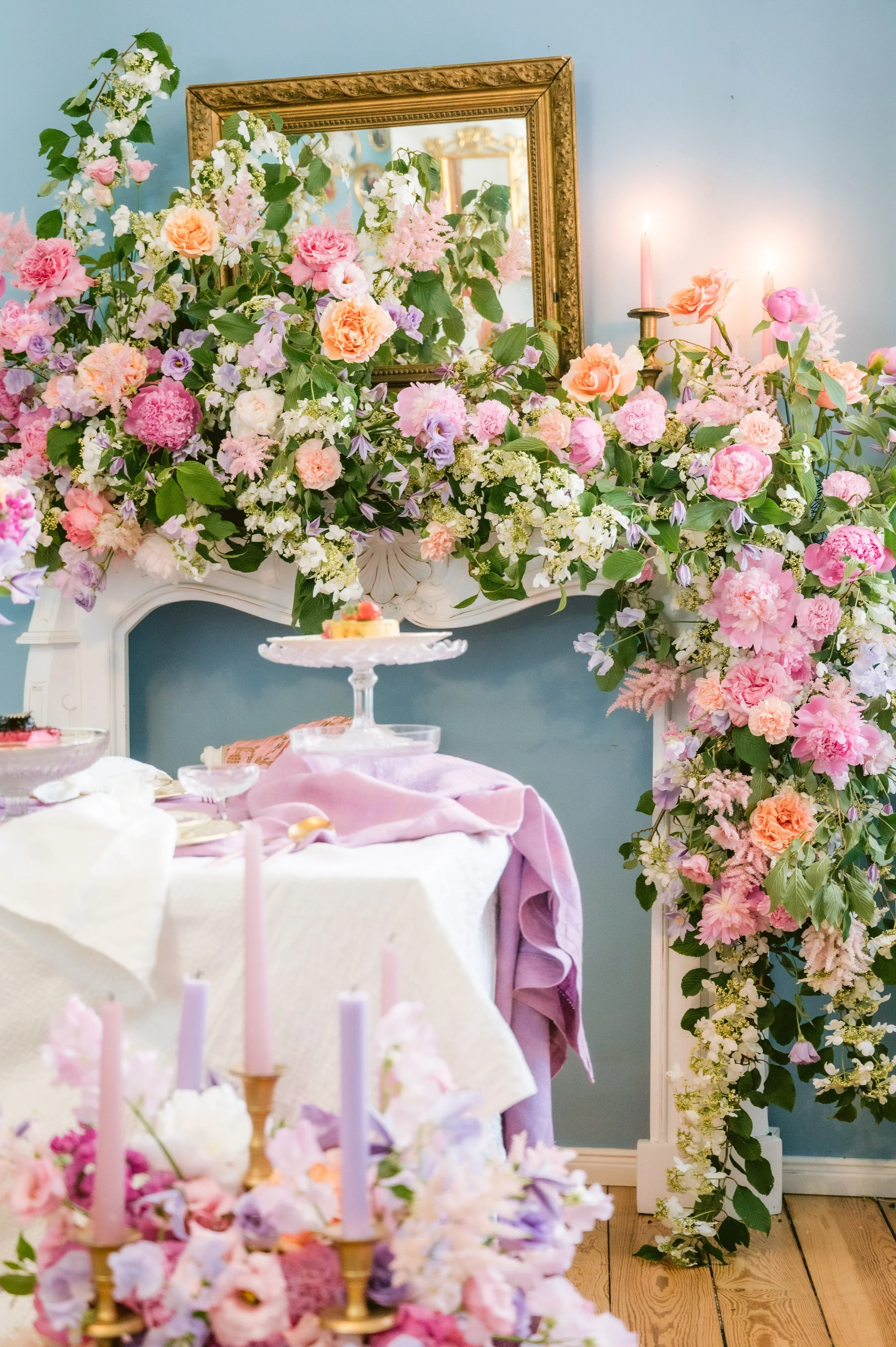
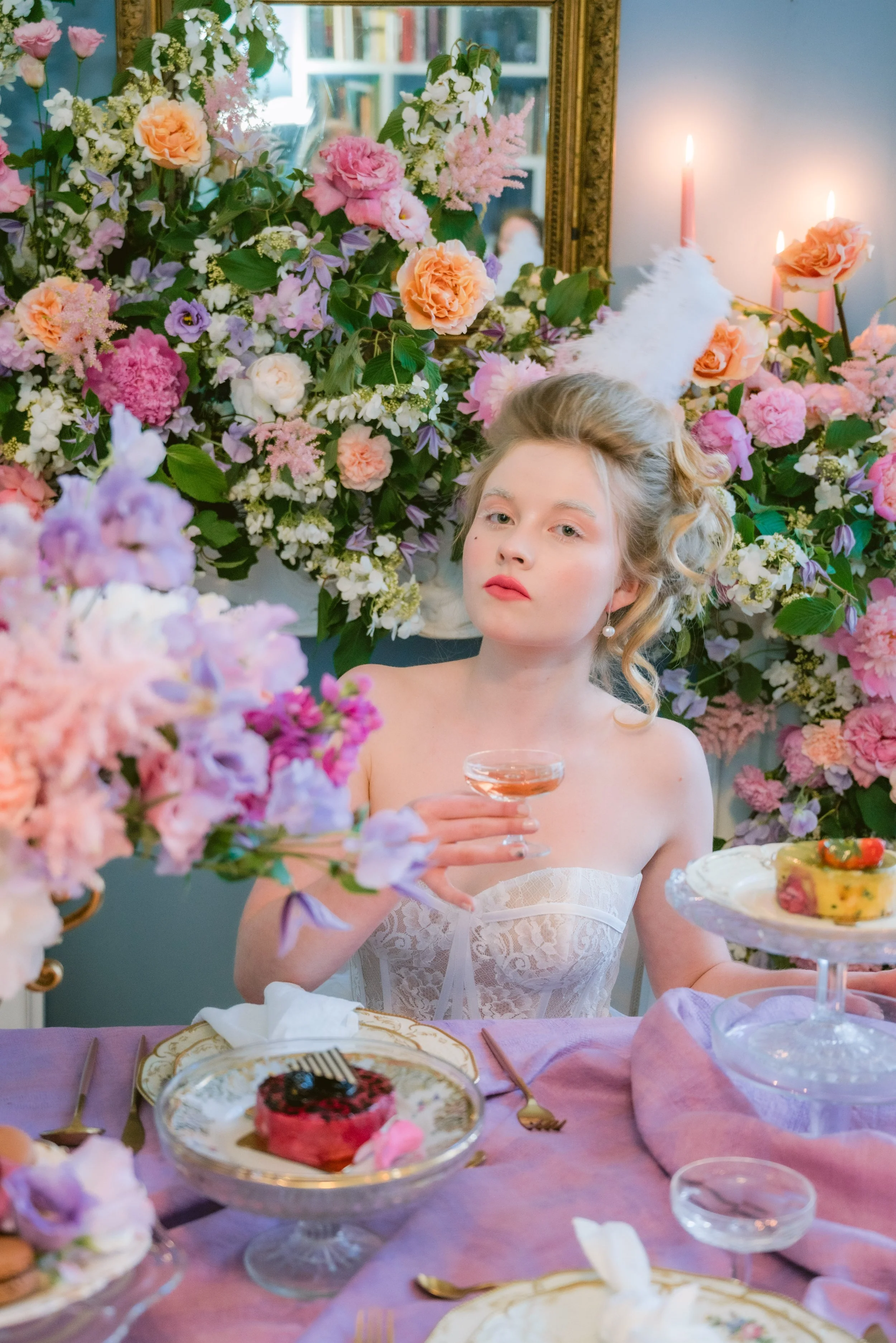
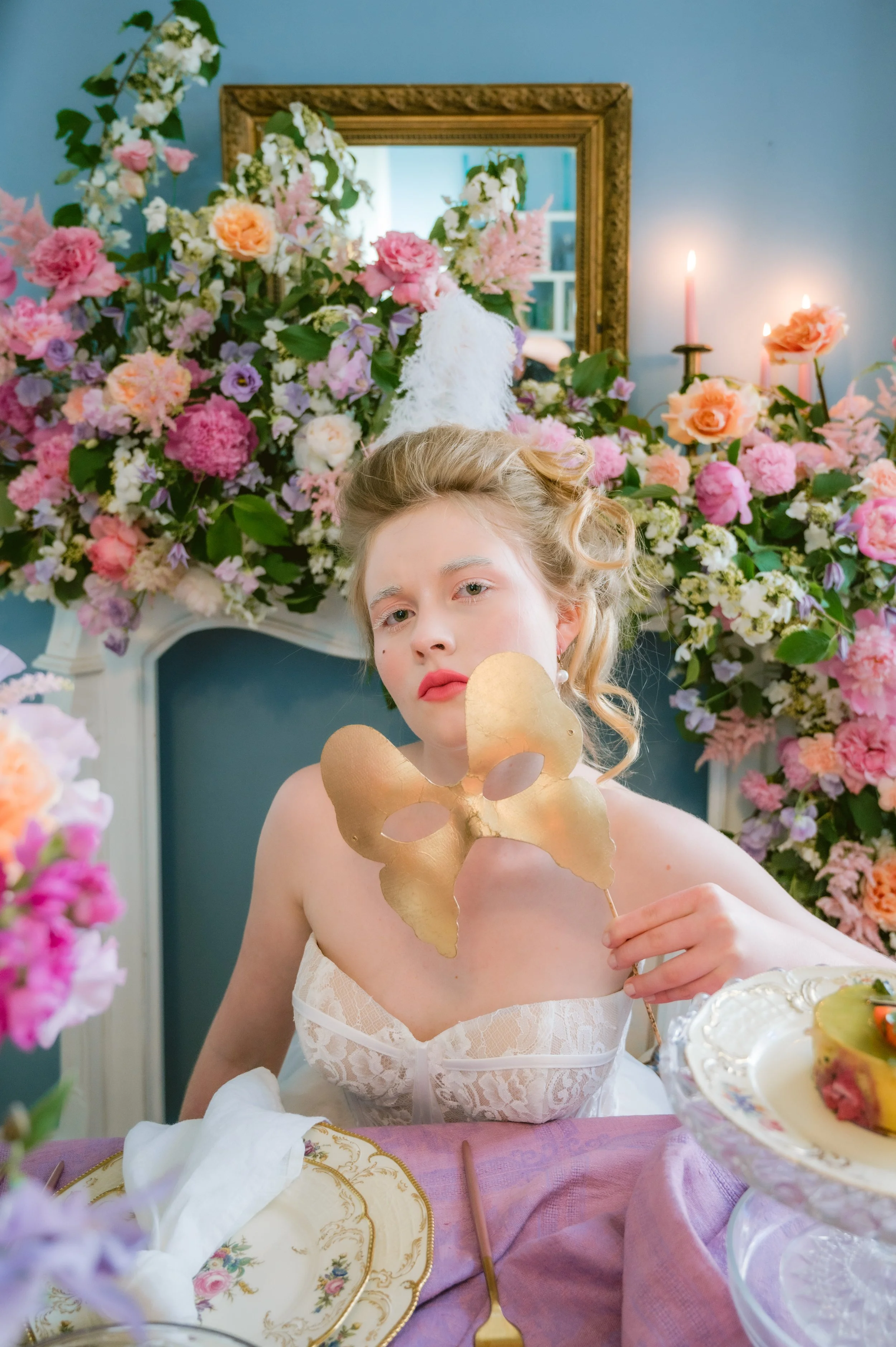
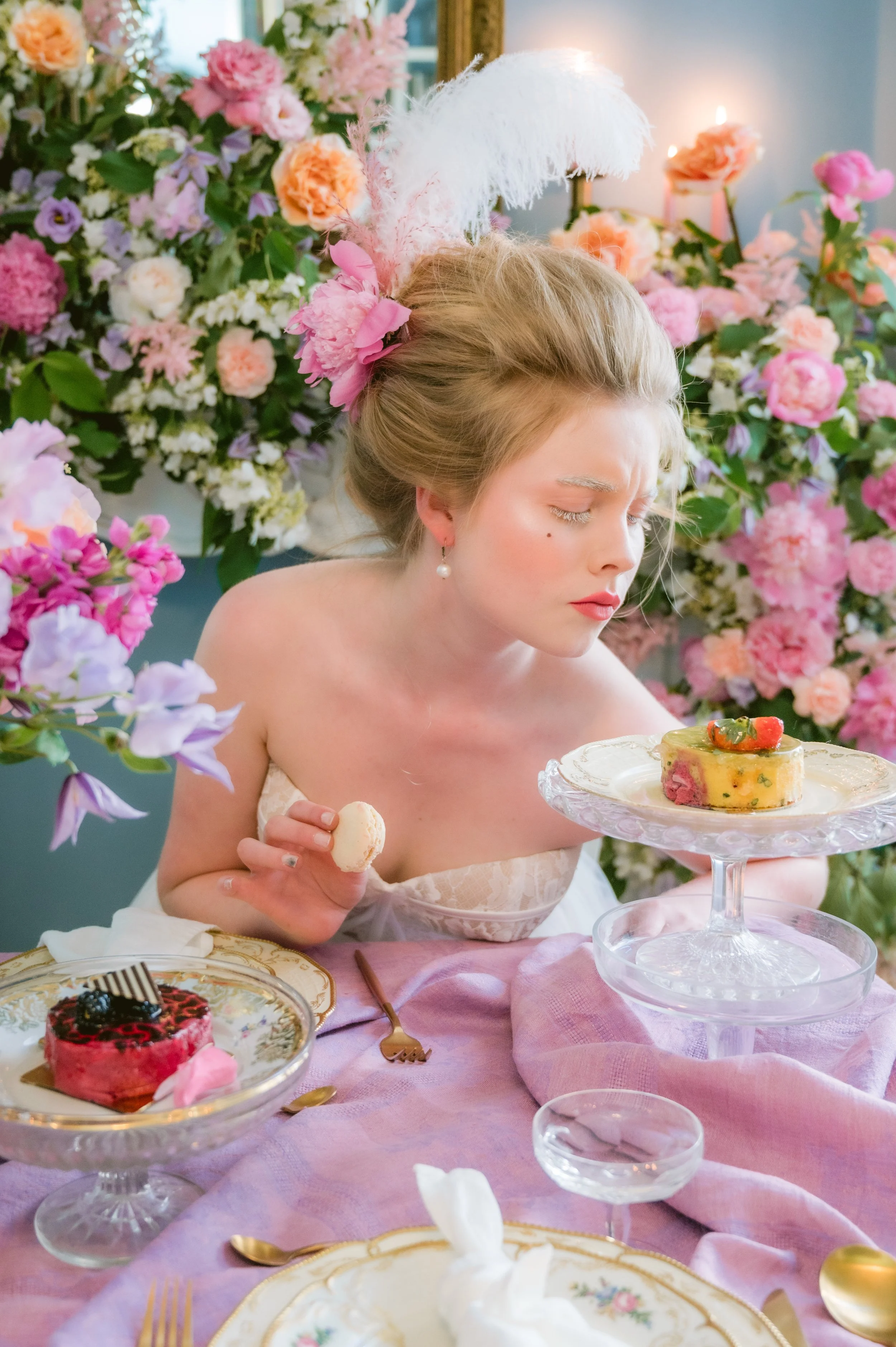
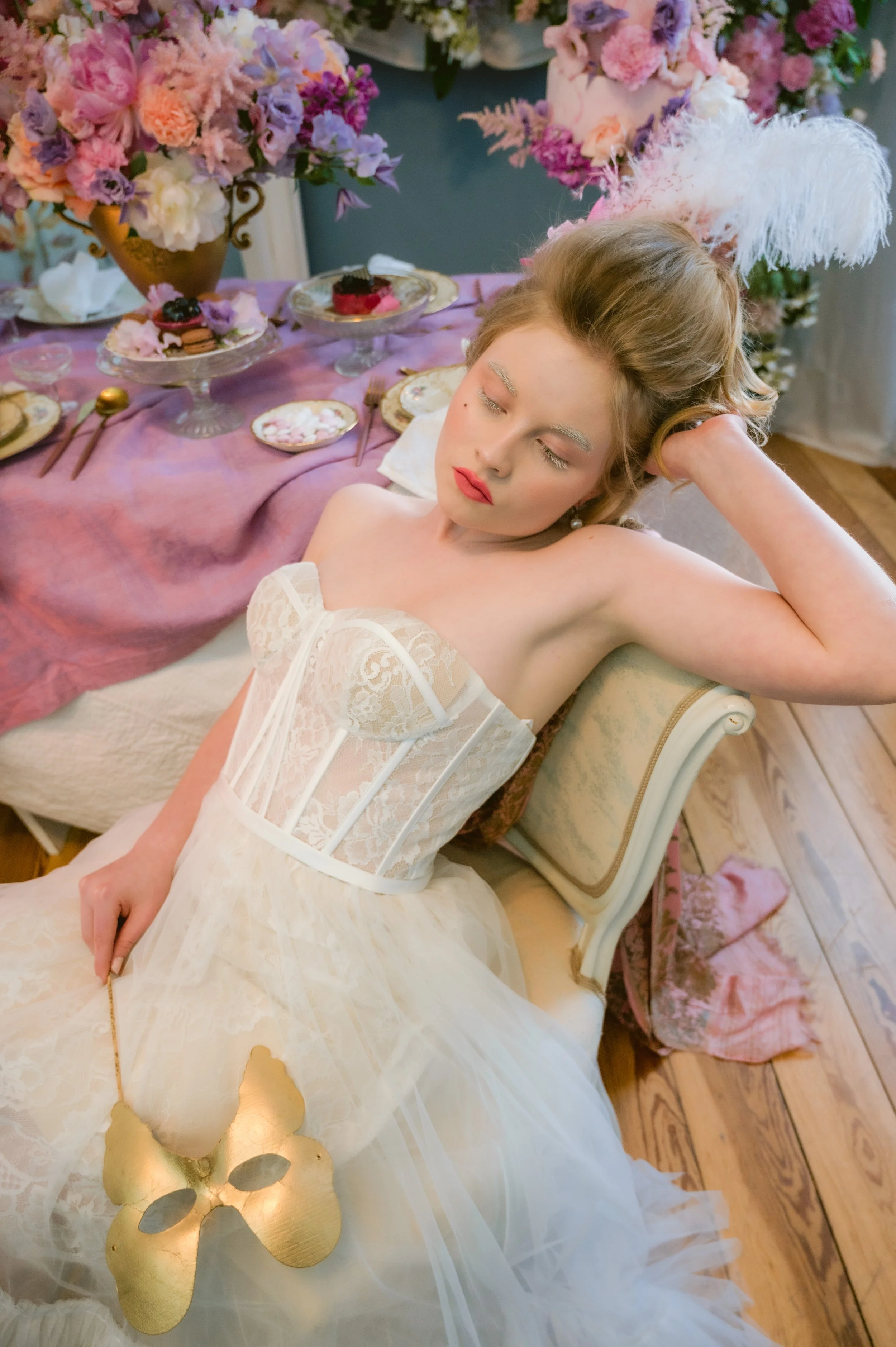
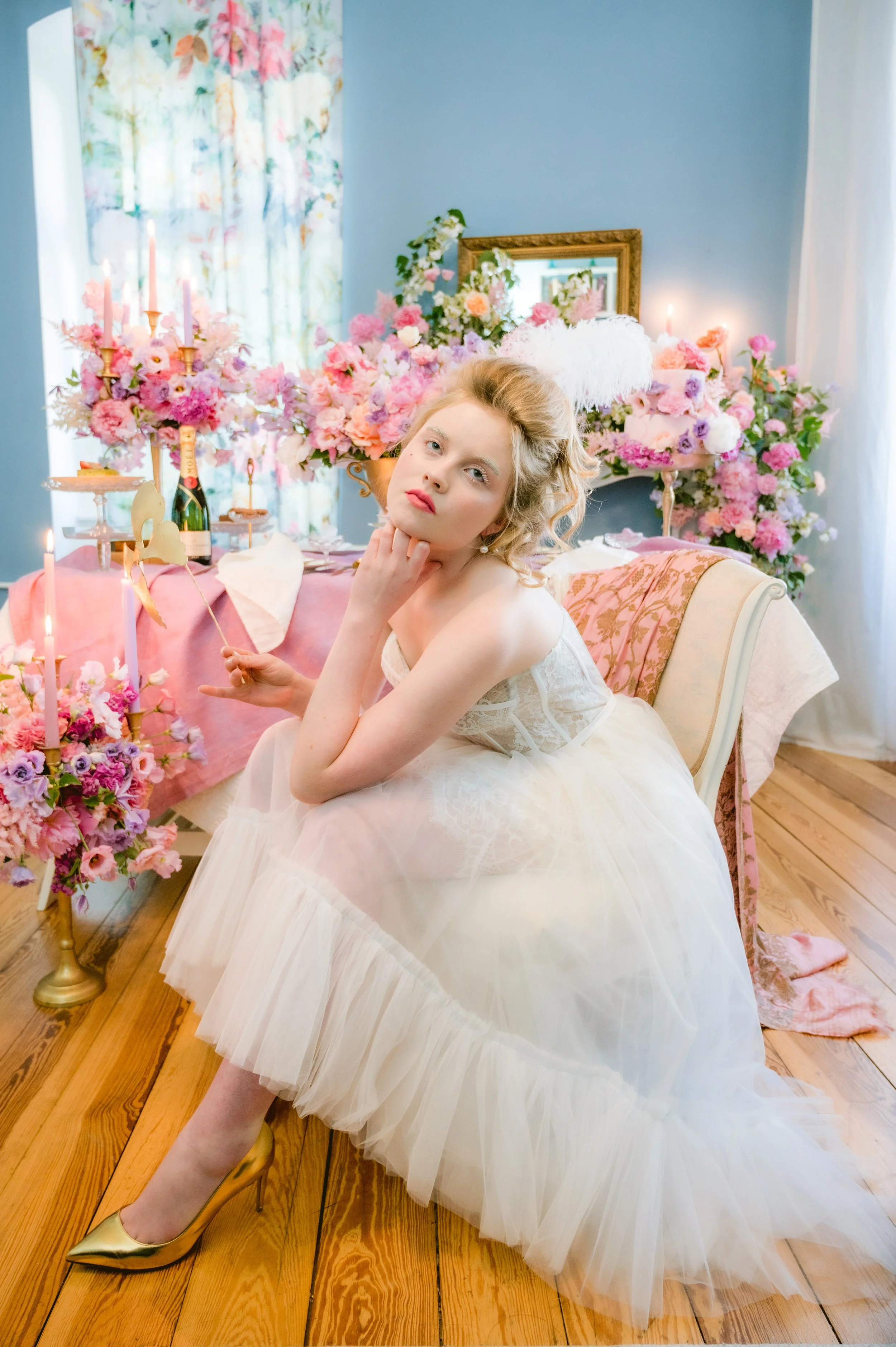
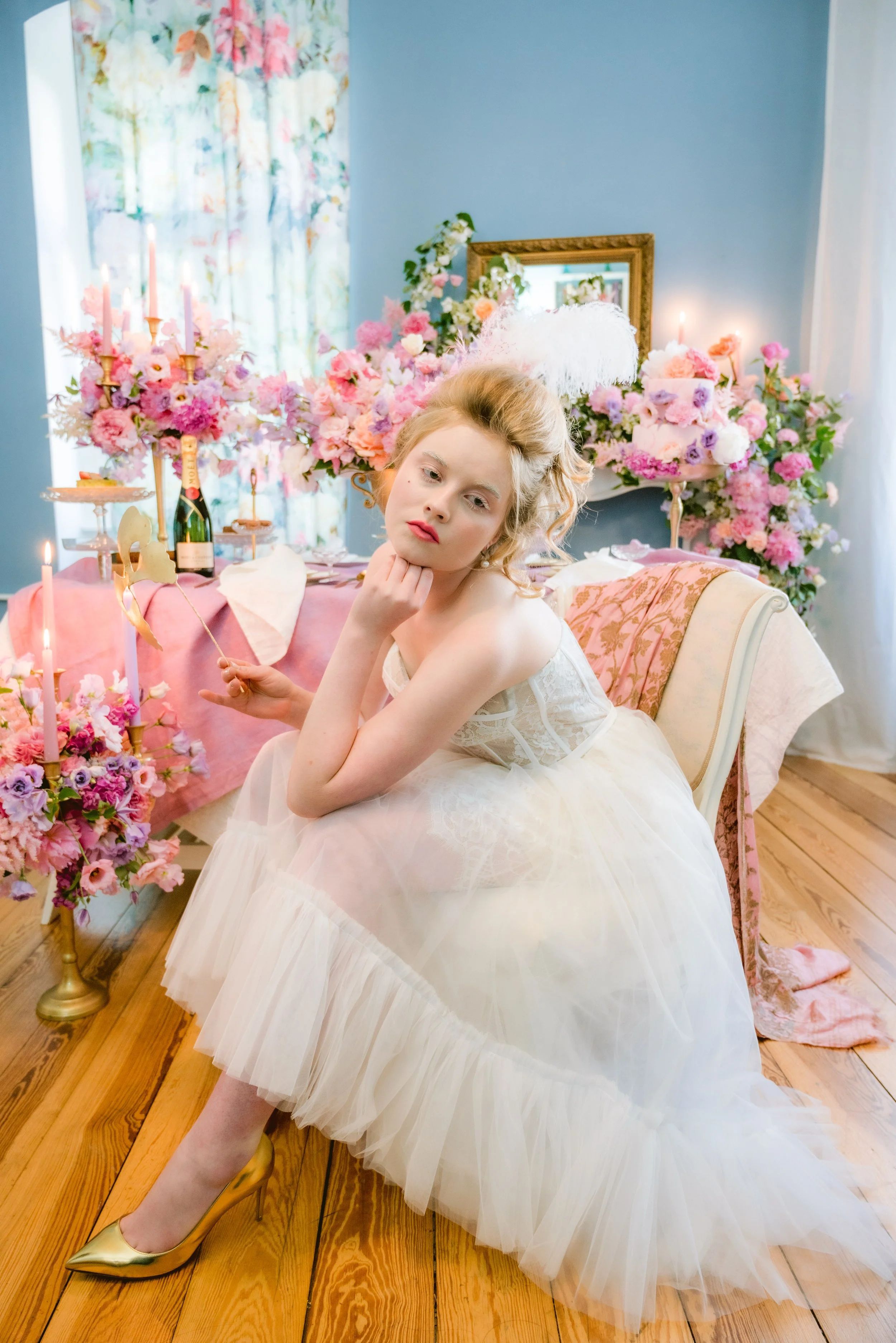
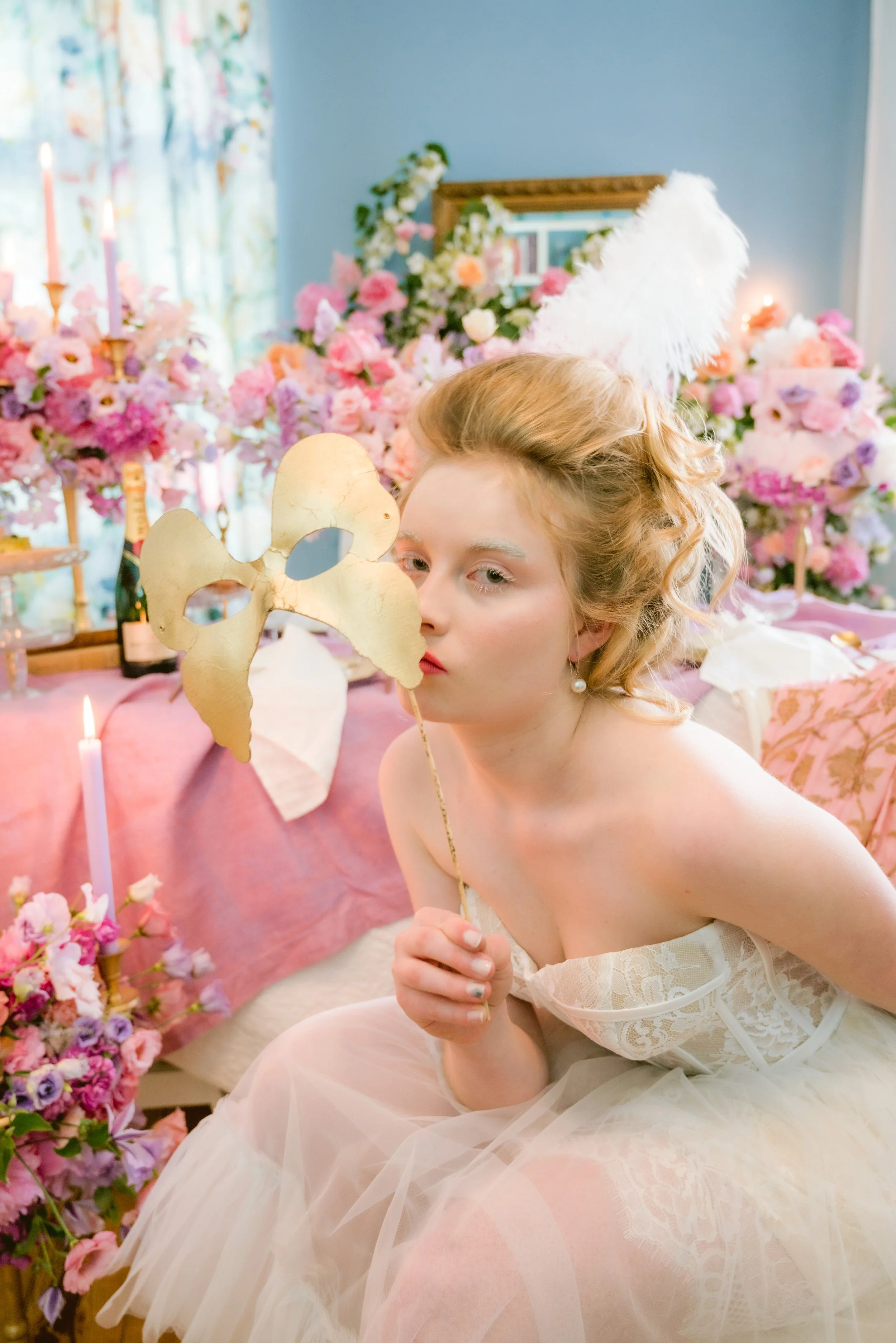
This style shoot is my homage to Marie Antoinette.
Not the caricature history created, but the young woman beneath it all.
A girl raised only to be married off for political alliance.
A woman searching for identity inside impossible expectations.
A woman who dared to cultivate beauty, softness, and self-expression in a world that ultimately punished her for it.
And maybe this shoot is also about being kinder to women in history.
About looking beyond the simplified narratives.
About understanding that women are always more complex than the stories told about them.
And perhaps most importantly:
about reclaiming beauty not as vanity, but as power. Love Julia
Thank you to all these talented ladies:
Design -TEAM Florist Stylist Course Berlin Flower School
Photograhper
Katja Knetschke - @fotografie_katjaknetschke
Model
Charlotte Becker-Ritterspach @charlotte132005
Flower & Design Concept
Julia Gauld @juliagauldflowers
Fashion Stylist
Kelly Ekardt @kellyekardt
Floral Stylist
Julia Gauld-Ritterspach @juliagauldflowers
Yukin Wu
Omar Olivias @floristomar
Make up
Alisa Fun @alisa_fun_official