The Rise of Tablescapes – Why Floral Design Is Expanding Beyond the Vase
Unlike fashion or interior design, floristry is an industry where trends evolve more slowly. Flowers are timeless, and many classic techniques remain relevant for decades. However, when a new direction begins to emerge, it often influences weddings, luxury events, hospitality, and brand experiences for years to come. One of the strongest developments we are seeing today is the rise of the tablescape.
A tablescape is far more than a beautiful floral centrepiece. It is the art of designing an entire table as a complete visual composition. Flowers become just one element within a carefully curated landscape of colour, texture, shape, height, and material.
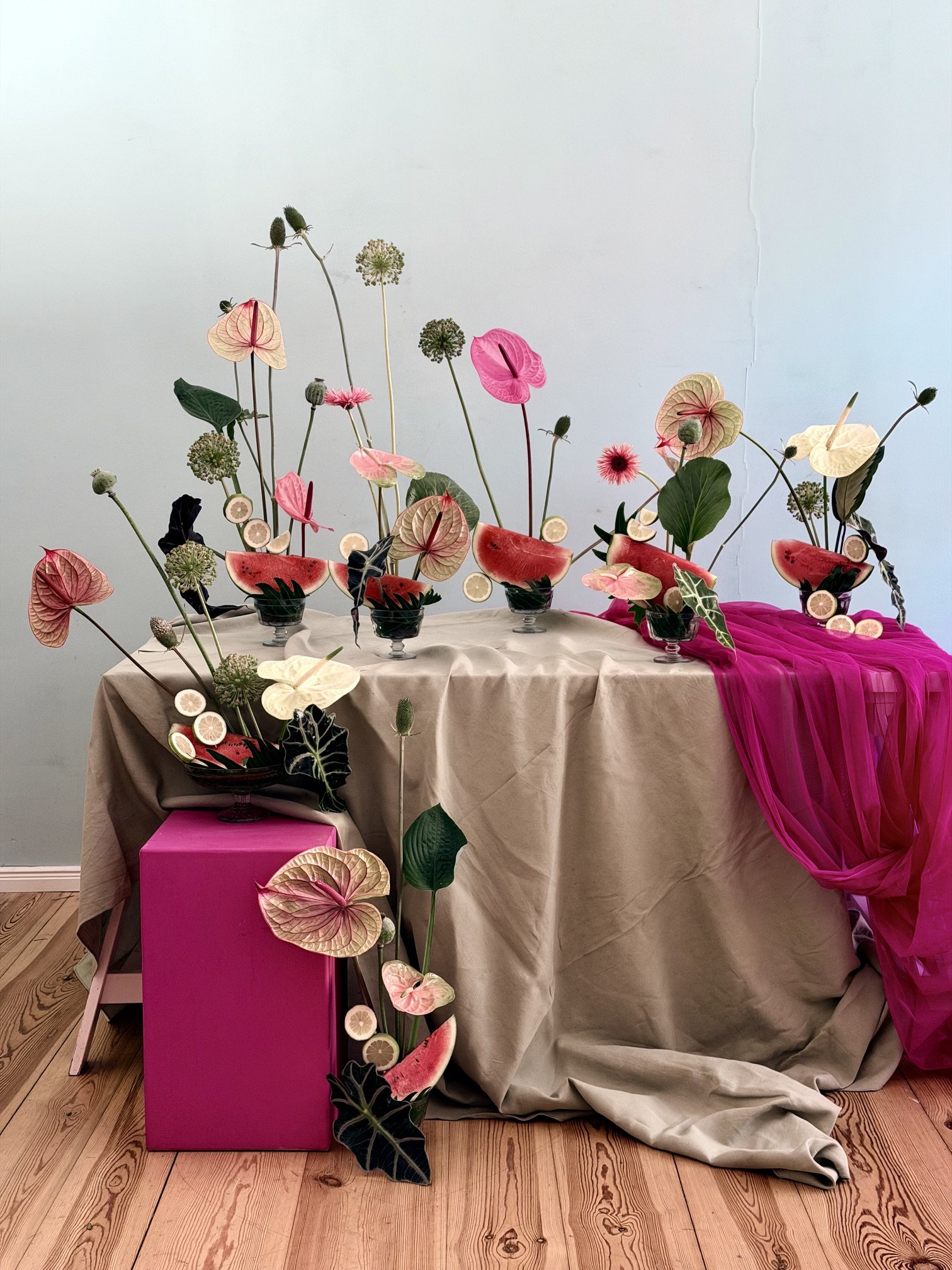
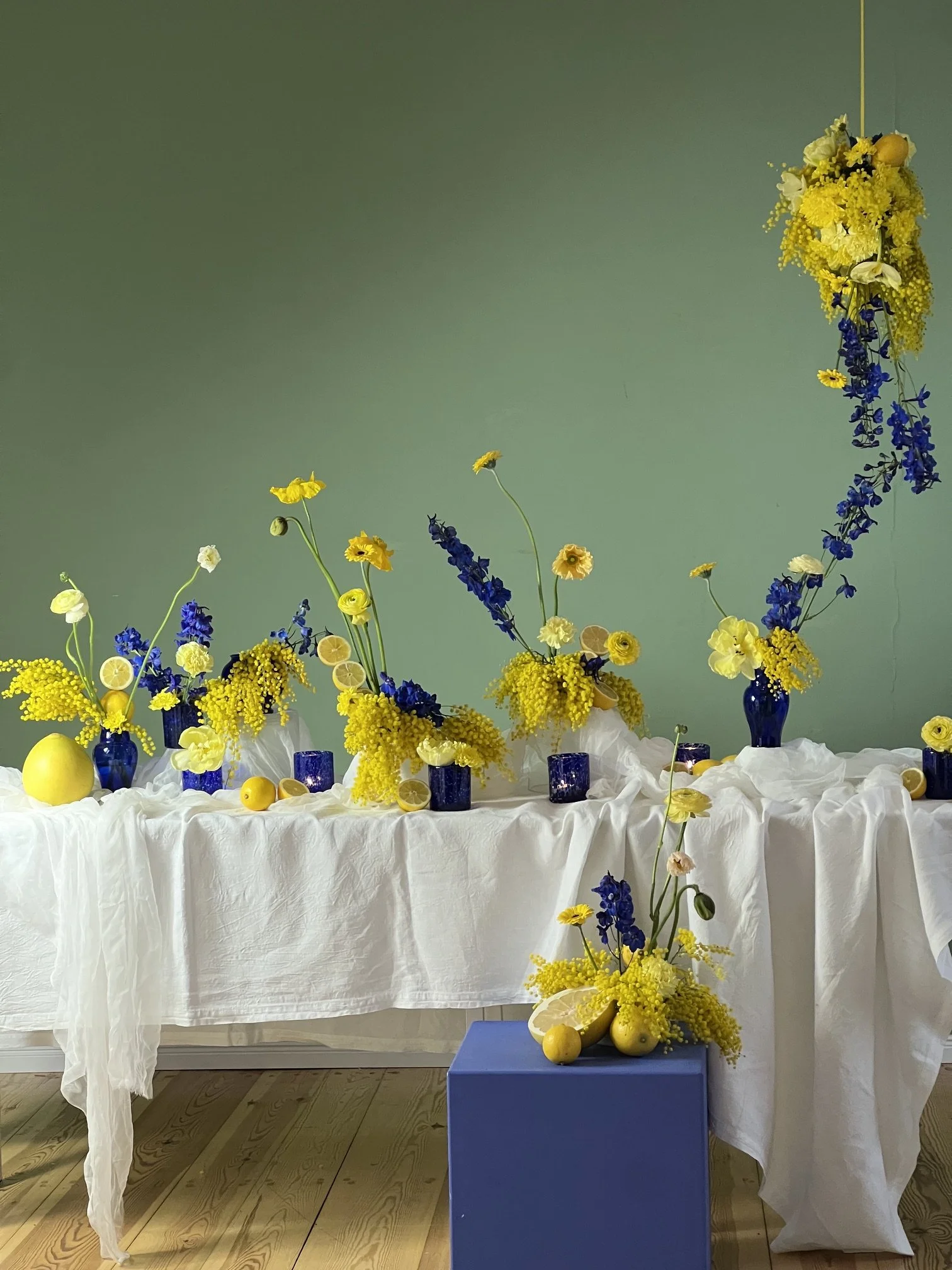
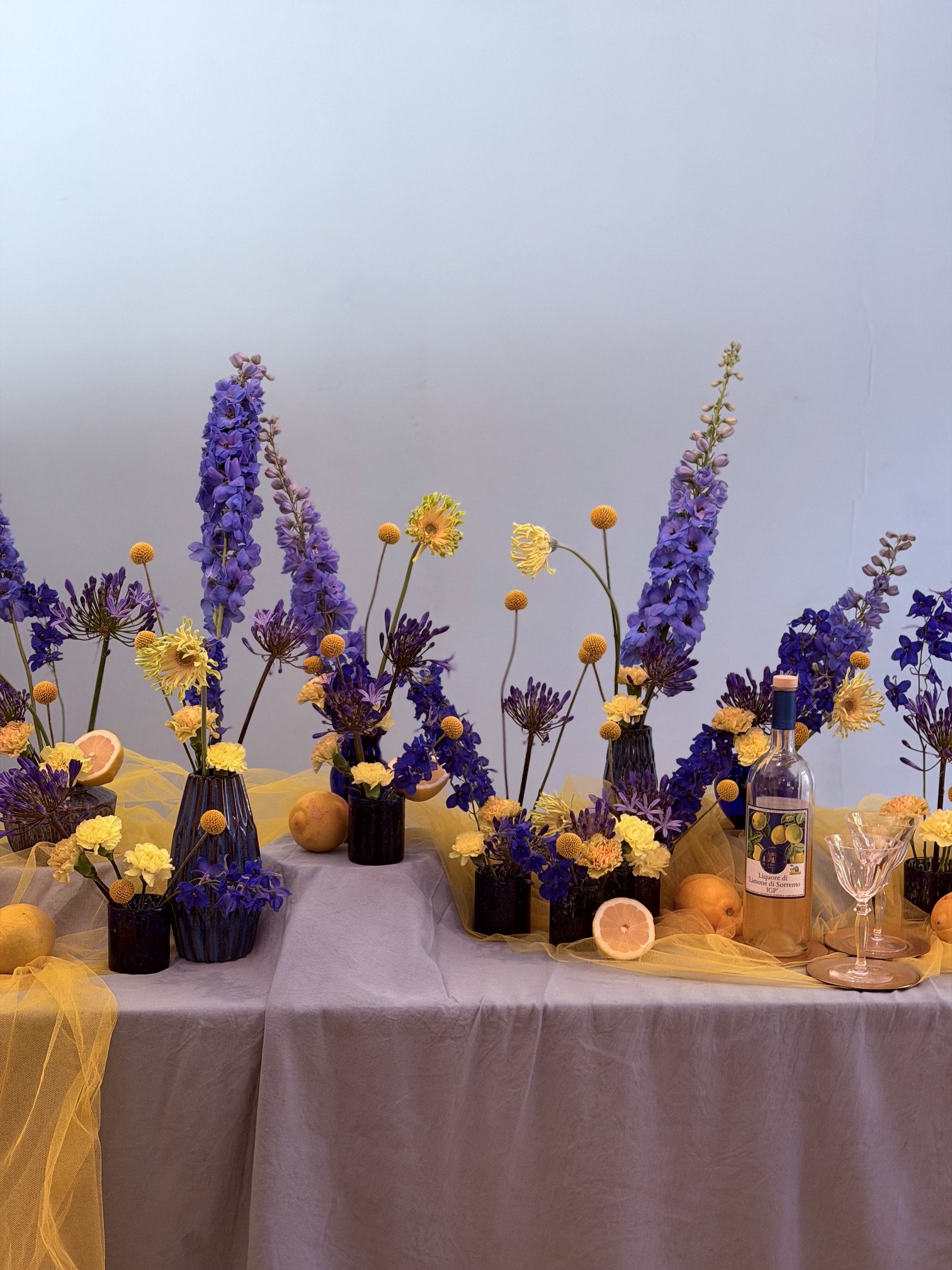
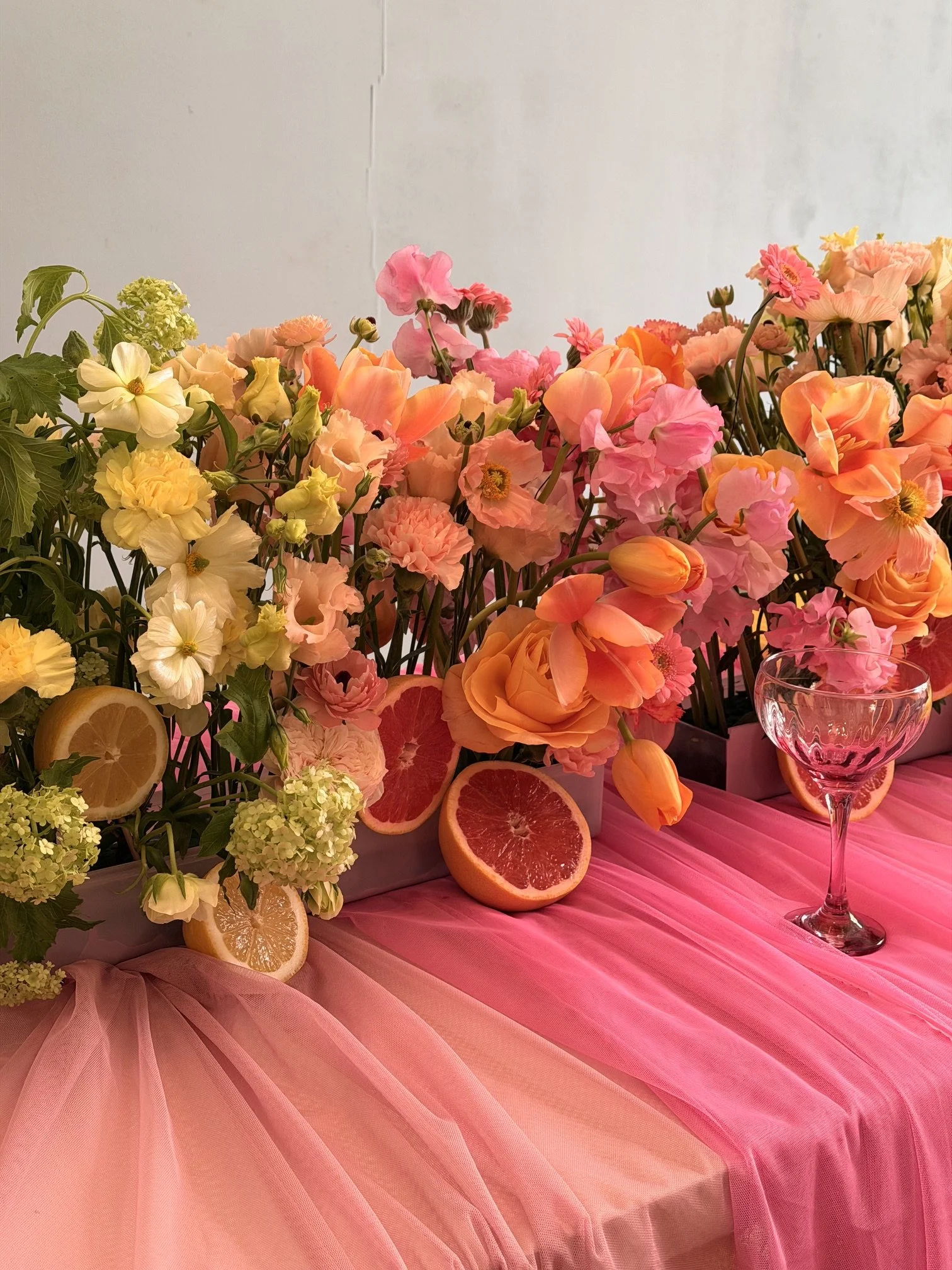
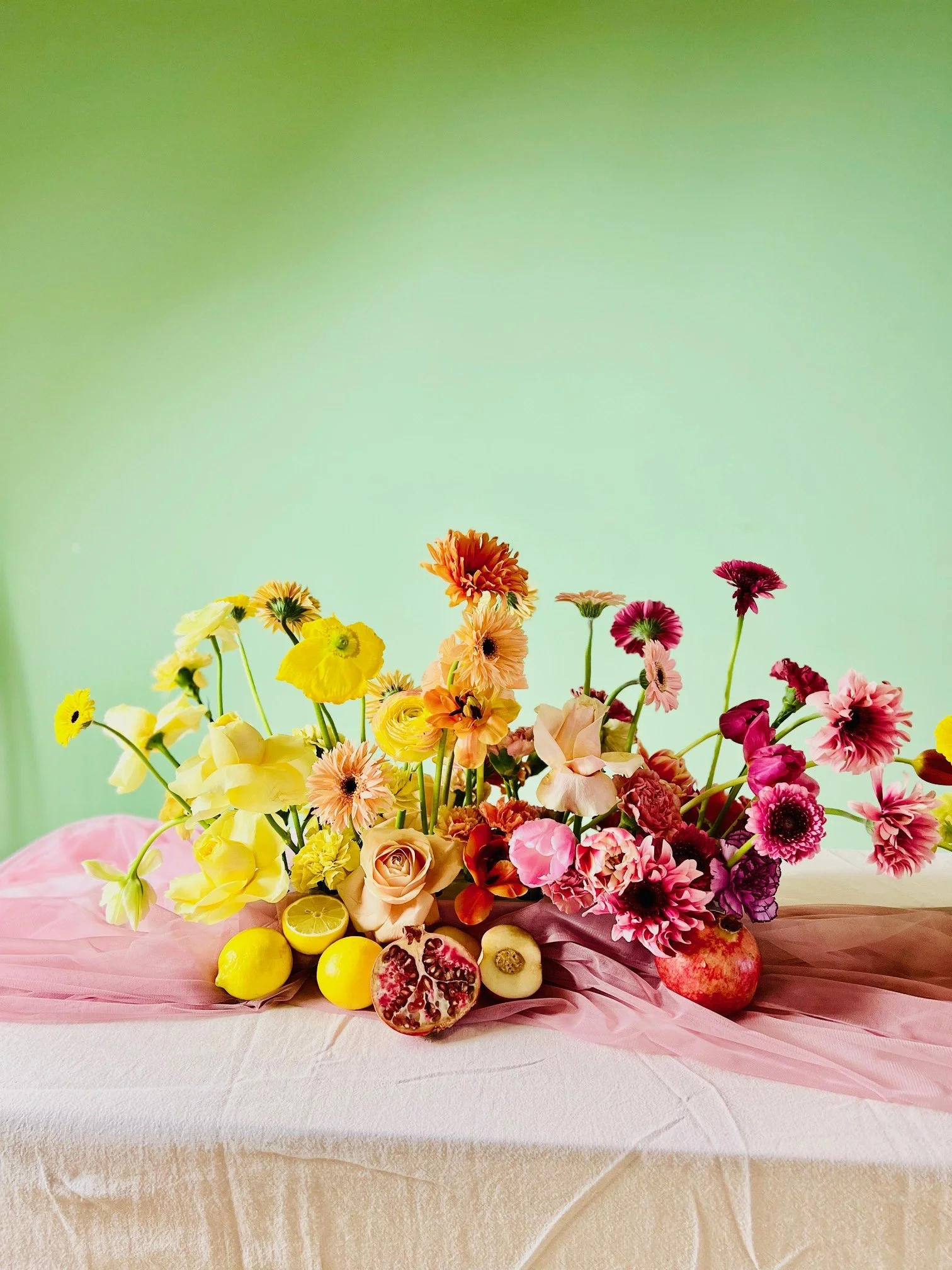
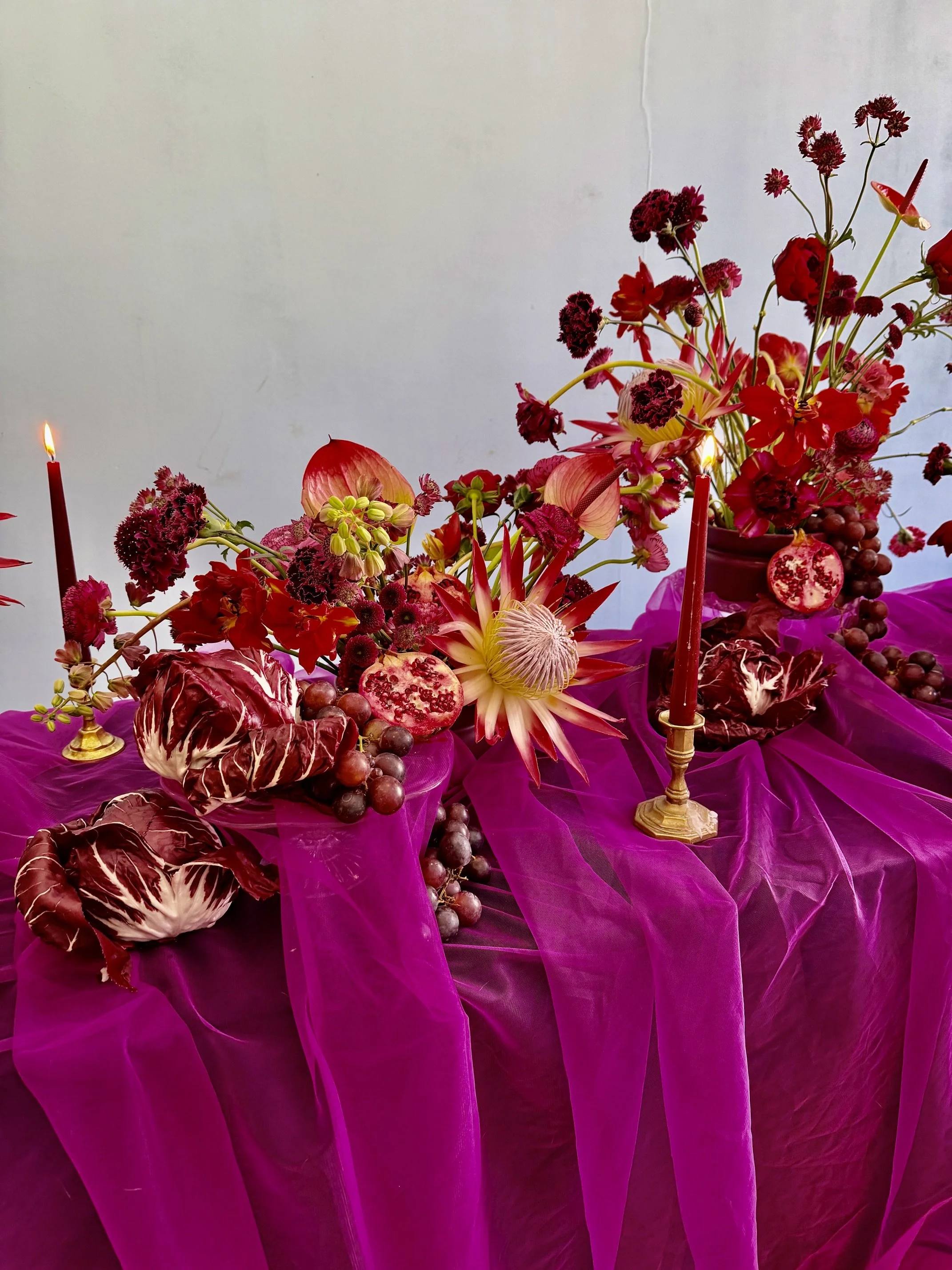
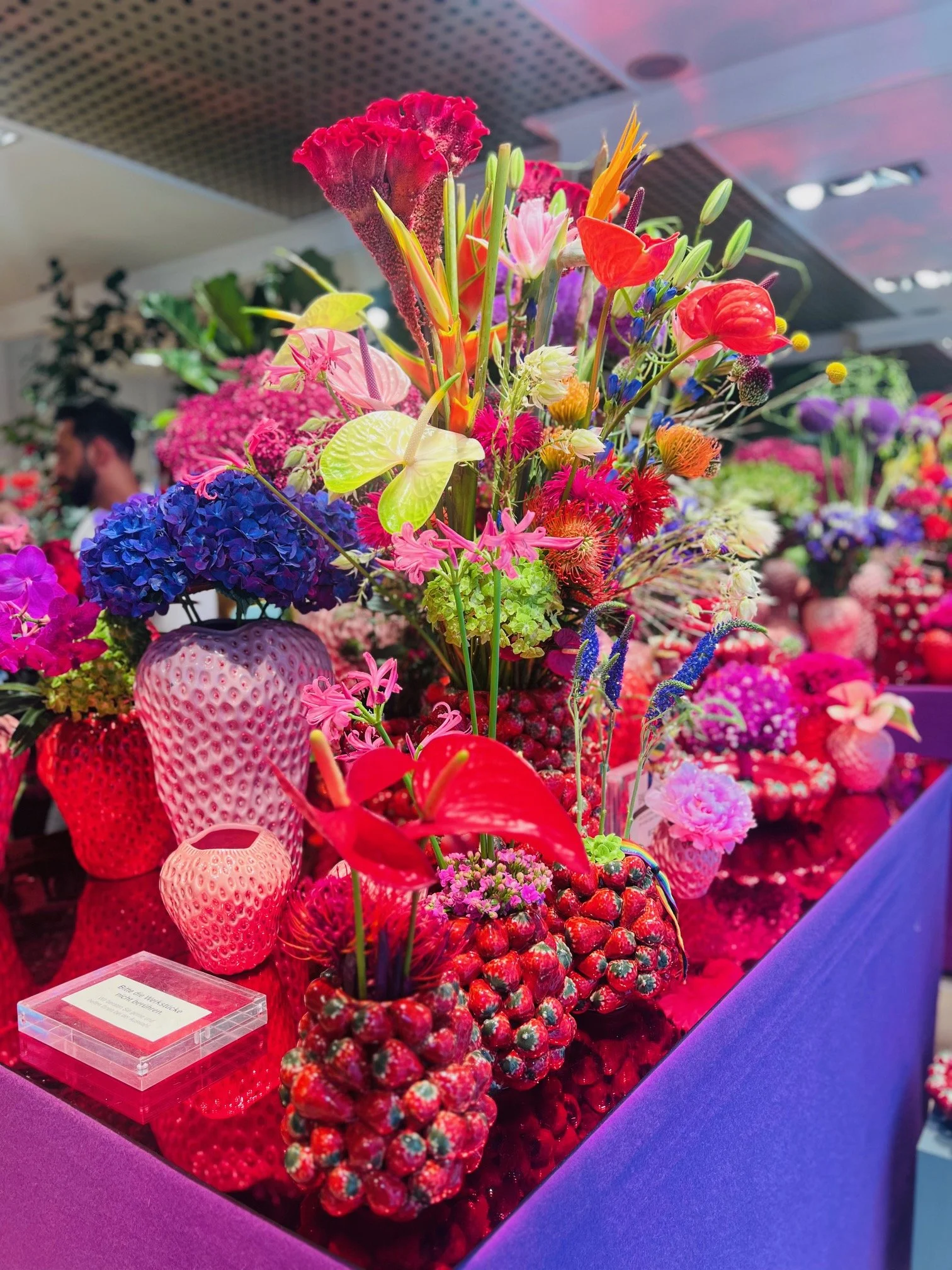
Modern tablescapes combine florals with sculptural vessels, candles, textiles, ceramics, fruit, vegetables, and decorative objects to create immersive dining experiences. Every element is considered—from the choice of linen and tableware to the rhythm of the floral arrangements and the balance between empty space and abundance.
Colour plays a particularly important role. Some tablescapes celebrate bold complementary contrasts, while others embrace soft analogous palettes or elegant ombré transitions, allowing colour to flow naturally across the table. The result is a composition that feels intentional, layered, and harmonious.
Another defining characteristic is the use of varying heights and visual rhythm. Low arrangements invite conversation, while taller sculptural pieces create drama and movement. Carefully selected vessels and floral mechanics help build depth, making the table feel like a living landscape rather than a collection of separate arrangements.
Tablescapes have become increasingly important for luxury weddings, editorial productions, brand launches, product presentations, corporate events, and private dinners. Depending on the creative direction, they can be beautifully minimalist with clean lines and restrained colour palettes, or richly opulent, inspired by historical banquet tables overflowing with flowers, fruit, and seasonal abundance.
At Berlin Flower School, we encourage our students to think beyond traditional floral arrangements. Designing a successful tablescape requires an understanding of composition, colour theory, proportion, storytelling, and the relationship between flowers and their surrounding environment. It is this holistic approach that transforms floristry into an immersive design experience.
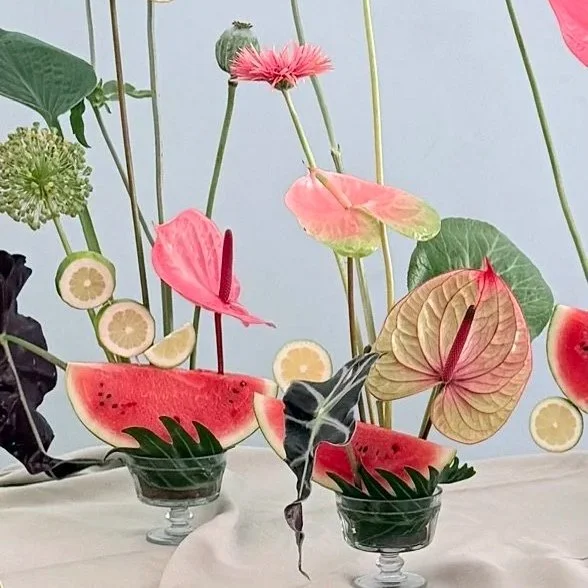
The following images, created during our courses, demonstrate how tablescapes can become powerful visual narratives—bringing together flowers, colour, texture, and styling to create unforgettable moments around the table. Love Julia